
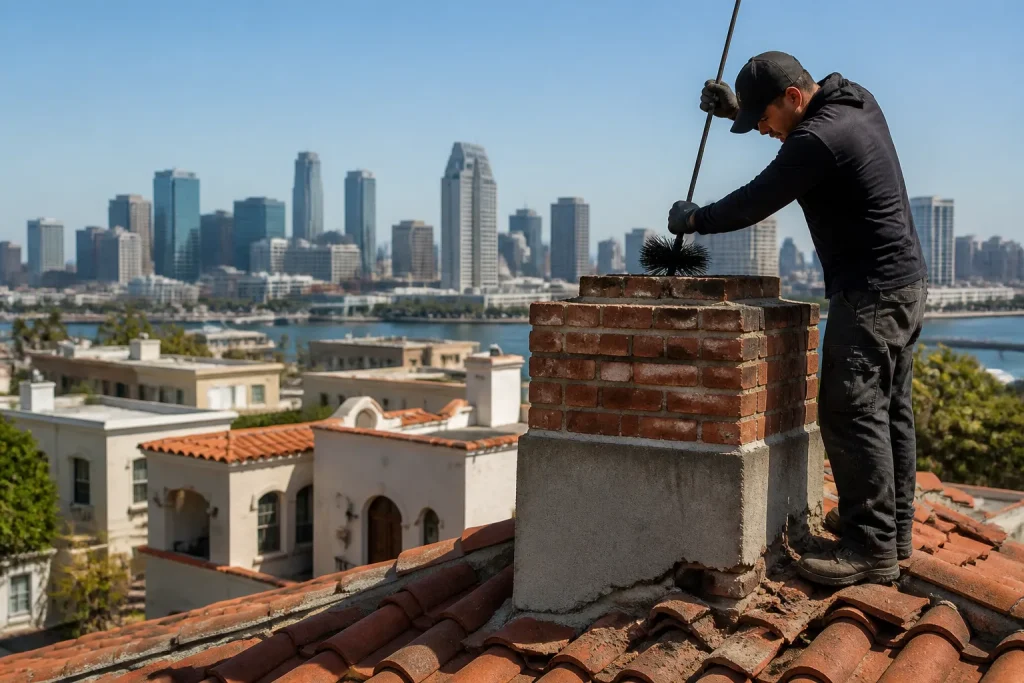
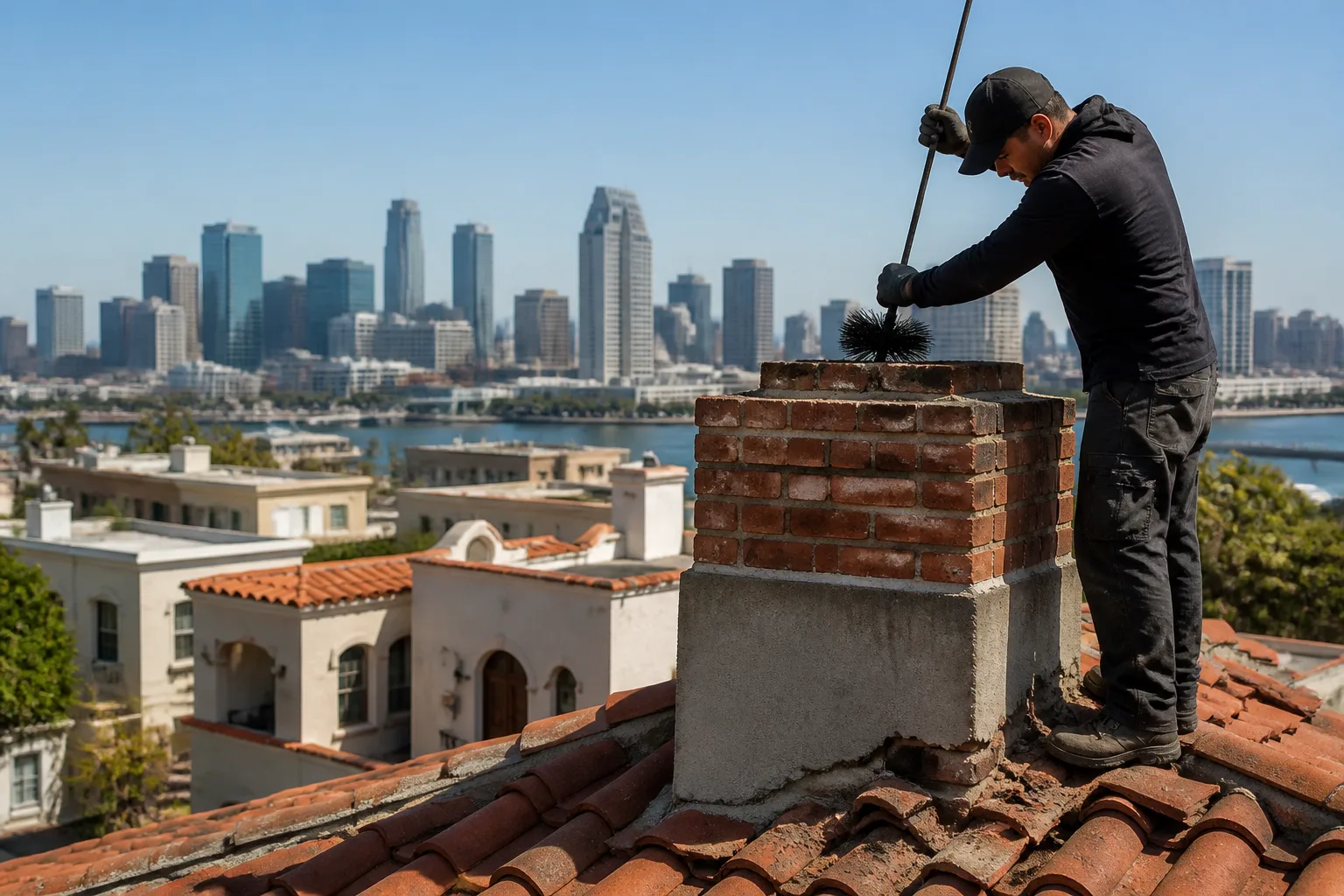
HeatShield Chimney Sweep in Downtown San Diego: A Homeowner’s Guide
HeatShield is not a cleaning product. It’s a ceramic resurfacing system that restores a compromised flue liner without tearing out the old one. For Downtown San Diego homeowners with pre-1980 masonry chimneys, it’s often the difference between a $1,200 repair and a $4,000 reline. Here’s what you actually need to know before you pay for either.
If you’d rather skip the research and just get an honest read on your chimney, call Hometown Chimney Sweep at (866) 670-3503 for a free estimate.
What HeatShield Actually Is (and What It Isn’t)
HeatShield is a Cerfractory flue sealant, a brushed-on ceramic compound developed specifically for chimney flue restoration. It carries its own UL listing for flue liner repair, which matters more than most people realize. A product without that listing can’t be used to restore a flue to code-compliant status. HeatShield can.
We’ve seen the confusion in person, working on chimneys across Downtown San Diego. A homeowner gets a camera inspection, sees flaky mortar joints, and assumes they need a full stainless steel reline. Sometimes they do. But a lot of the time, the damage is what the industry calls joint erosion: the mortar between clay tile sections has deteriorated from decades of heat cycling and moisture, while the tiles themselves are still structurally sound. That’s exactly the scenario HeatShield was engineered for.
Be clear on one thing: this is not a paint, and it’s not a patch. It’s a ceramic material applied to the interior flue walls where it bonds to the existing clay or masonry and forms a new, continuous surface. The cured result is a smooth, insulated flue rated for the temperatures a wood-burning fireplace produces. For older Downtown San Diego homes in neighborhoods like Bankers Hill, Golden Hill, and Sherman Heights, where chimneys are often original to 1910s and 1920s construction, this is frequently the smartest repair pathway.
The Three HeatShield Applications (and Which One Your Chimney Needs)
HeatShield isn’t a one-size-fits-all product. The system includes three distinct application methods, and the right one depends on what the camera inspection actually shows. Here’s how they break down for a typical masonry chimney:
- Joint repair (spray or trowel application): This is for flues where the clay tiles are still intact but the mortar joints between them have eroded. Technicians apply the sealant directly into and over the joints. This is the most common scenario we see in Downtown San Diego’s older homes, and it’s the least expensive HeatShield option.
- Resurfacing (brush or spray application): When the tile surfaces show spalling, flaking, or minor cracking but the flue system is still sound, HeatShield is applied across the entire interior surface. Think of it as resurfacing rather than just joint repair.
- SmoothCoat: This is a specialized application for repairing cracked or damaged clay liners or for smoke chambers. It involves filling voids and then smoothing the surface. If a prior fire or decades of neglect left the liner rough and failing, SmoothCoat restores the flue to a consistent, smooth surface.
No crew should quote you a HeatShield price without first doing a Level II camera inspection. The camera tells us which method applies. If someone quotes over the phone without looking at the flue, that’s a red flag, in Downtown San Diego or anywhere else.
How a Sweep Determines If Your Chimney Is a HeatShield Candidate
This is the part most online guides miss. HeatShield has a specific candidacy window, and there are two ways a chimney can fall outside it.
During a level II inspection, a camera runs the full length of the flue. Joint erosion shows up as dark, recessed lines where mortar has crumbled away. You can see the camera pass over a ridge, then dip into a hollow. That hollow is where hot gases and creosote can escape the liner and reach the surrounding masonry. In older Downtown San Diego homes, especially those built before 1940 in areas like Bankers Hill or Mission Hills, this pattern is extremely common. The chimneys were built well, but mortar doesn’t last forever, and salt air from the coast accelerates deterioration.
What disqualifies HeatShield is structural compromise. If the camera shows a tile that has collapsed, shifted out of alignment, or if the outer masonry itself has separated from the flue, you’re past the point of resurfacing. That’s a full reline job, typically with a stainless steel system like DuraFlex. Same story if there’s active water intrusion through a failed crown or flashing that has soaked the flue structure. You fix the water problem first, then address the liner. HeatShield can’t stop bulk water, so nobody honest should sell it as a waterproofing solution.
One real-world example from a job in Golden Hill last year: the homeowner was told by another company she needed a $4,800 reline. We ran the camera and found joint erosion only, tiles intact, no shifting. She got HeatShield joint repair for under $1,500 and a flue that now passes inspection. That’s the kind of difference a proper camera inspection makes.
Why Downtown San Diego’s Older Chimneys Are Prime HeatShield Candidates
The housing stock matters here. Walk through Bankers Hill, Golden Hill, or the older stretches of East Village, and you’re looking at homes built between 1890 and 1940. Most have original masonry chimneys with clay tile liners. Those liners have been doing their job for a hundred years, which means the mortar between tiles has been expanding and contracting through a century of hot-and-cold cycles.
Add two Downtown San Diego-specific factors. First, salt air. The marine layer pushes moisture into porous masonry, and that moisture accelerates mortar breakdown. Second, light seasonal use. Most Downtown homes aren’t burning fires five months a year like a mountain cabin. The chimney sits dormant for long stretches, which lets creosote and moisture sit on the liner instead of burning off. That intermittent use, combined with age and salt exposure, produces exactly the kind of gradual joint erosion HeatShield was created to address.
It’s also worth noting that many Downtown San Diego homes have gone through renovations over the decades. Sometimes a fireplace was converted to gas, then back to wood, or a chimney was abandoned behind a wall. We’ve pulled enough surprises out of these older homes to know that a flue that hasn’t been inspected in 20 years should be looked at before the next burning season.
HeatShield Cost vs. Full Reline: The Honest Math
Here’s the comparison most Downtown San Diego homeowners actually need. A full stainless steel liner reline in this market typically runs $2,500 to $5,000, depending on flue length, access, and whether the chimney has multiple flues. That’s a fair price for a necessary job, and when the liner is structurally failed, it’s the right call. Stainless systems like DuraFlex are the gold standard for structural relines, and we install them when the situation warrants.
But for a flue with intact tiles and eroded joints, HeatShield typically runs $1,200 to $2,500 in San Diego, depending on which application method applies and how many flues are involved. Isolated joint repair on a single, easily-accessed flue lands on the lower end. Full resurfacing of a larger flue or SmoothCoat work in a smoke chamber runs higher. The real takeaway: HeatShield can often restore a flue to UL-listed safety status for roughly half to two-thirds the cost of a full reline. That’s money a homeowner in, say, a 1920s craftsman in Bankers Hill can put toward other renovation priorities while still addressing fire safety.
One thing we’ll always tell people plainly: if the camera shows structural failure, don’t shop for HeatShield. You need a reline, and delaying it because the quote is higher doesn’t make the chimney safer. The service is only as good as the diagnosis behind it.
If you’re in Downtown San Diego and want someone to run the camera and give you a straight answer, our Chimney Sweep in Downtown San Diego team does exactly that. And if the inspection turns up an actual repair need, chimney repair is handled by the same crew, no second company involved.
When to Call a Pro (and When You Can Wait)
If you haven’t had the chimney inspected in more than two years, call before the next fire. That’s not just boilerplate. The National Fire Protection Association’s guideline is annual inspection, but in a mild climate like San Diego’s, homeowners reasonably stretch that. Two years is a practical line: enough time for creosote to build up or for prior damage to worsen, not so long that you’re inviting a chimney fire.
The signs that warrant immediate attention: you smell smoke in the house after a fire has been lit for a while, you see white staining or flaking on the exterior brick, or you hear debris falling when wind comes through. Any of those suggest the flue interior has changed since the last time anyone looked at it. A camera inspection gives you the answer. At minimum, a chimney sweep will clear the flue so you’re not burning against a creosote load, and the technician can tell you whether HeatShield is worth considering.
And while we’re on the subject of built-up hazards: don’t ignore the dryer vent. It’s the most common residential fire source most homeowners never think about. Our dryer vent cleaning service is part of the same safety-first approach we bring to chimneys. If your dryer has been slow lately, that’s lint building up in the vent, and that’s a fire hazard hiding behind the wall. We clear it.
The Bottom Line
HeatShield is a legitimate, UL-listed solution that restores compromised flue liners without a full teardown. For Downtown San Diego homeowners with older masonry chimneys, especially in neighborhoods like Bankers Hill, Golden Hill, and Sherman Heights, it’s often the right tool and a significantly less expensive one than a stainless reline. But it’s not a universal answer. The only way to know whether your chimney is a candidate is a Level II camera inspection. If that inspection shows structural failure, go with the reline. If it shows joint erosion, HeatShield likely solves the problem for thousands less.
The brands we use, by the way, are the same ones contractors and certified chimney professionals rely on across the industry: HeatShield, DuraFlex, Copperfield, and Famco. Professional-grade parts, neighborhood-level accountability. From the first sweep to the finished repair, one crew, one call.
If you’re in Downtown San Diego and need help, Hometown Chimney Sweep offers free estimates. Call (866) 670-3503 and we’ll run the camera and tell you exactly what your flue needs, nothing more.
Frequently Asked Questions
HeatShield application in San Diego typically runs $1,200 to $2,500, depending on whether you need isolated joint repair, full resurfacing, or SmoothCoat work. Joint repair on a single flue is the least expensive; full resurfacing or smoke chamber work lands higher. A full stainless steel reline, by comparison, generally runs $2,500 to $5,000. The only way to get an accurate quote is a Level II camera inspection. Call (866) 670-3503 for a free estimate from our Downtown San Diego crew.
Yes. HeatShield’s Cerfractory flue sealant is UL-listed for use in wood-burning chimney flues. Once cured, it forms a smooth ceramic surface rated for the temperatures a typical wood fire produces. The key is proper application by a technician who knows which of the three HeatShield methods applies to your specific flue condition. A camera inspection first is non-negotiable. Call (866) 670-3503 to schedule one.
It depends on the crack. Minor surface cracking and spalling on otherwise-intact clay tiles can often be addressed with HeatShield resurfacing or SmoothCoat. But if the camera inspection shows a tile that has shifted, collapsed, or separated from the flue structure, that’s a structural failure and HeatShield is not the right solution. In that case, a stainless steel reline with DuraFlex is the answer. We install both, and the camera tells us which one you need. Call (866) 670-3503 for a straight answer.
HeatShield is a permanent liner restoration, not a temporary sealant. When applied correctly to a flue that is otherwise structurally sound, the ceramic surface is designed to last the remaining life of the chimney. The variables are continued water intrusion, which no liner coating can overcome, and whether the underlying flue was truly stable at the time of application. That’s why a thorough inspection before application matters as much as the application itself. Call (866) 670-3503 and we’ll show you exactly what your flue looks like before recommending anything.
Written by the team at Hometown Chimney Sweep, serving Downtown San Diego since 2015.
Need Chimney Cleaning Help?
Call Hometown Chimney Sweep - licensed & insured, here with fast help in Downtown San Diego.
(866) 670-3503