
Last updated November 2, 2026
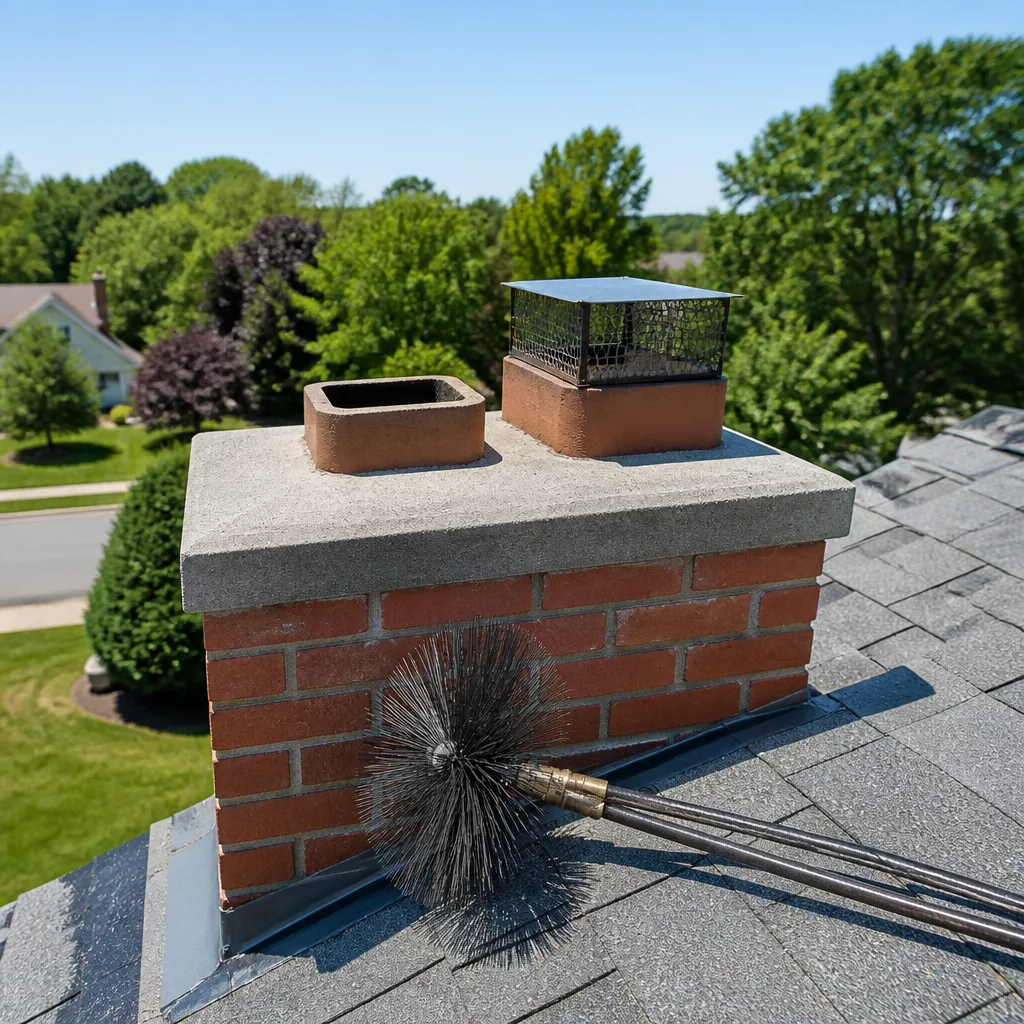 Sweep & inspection
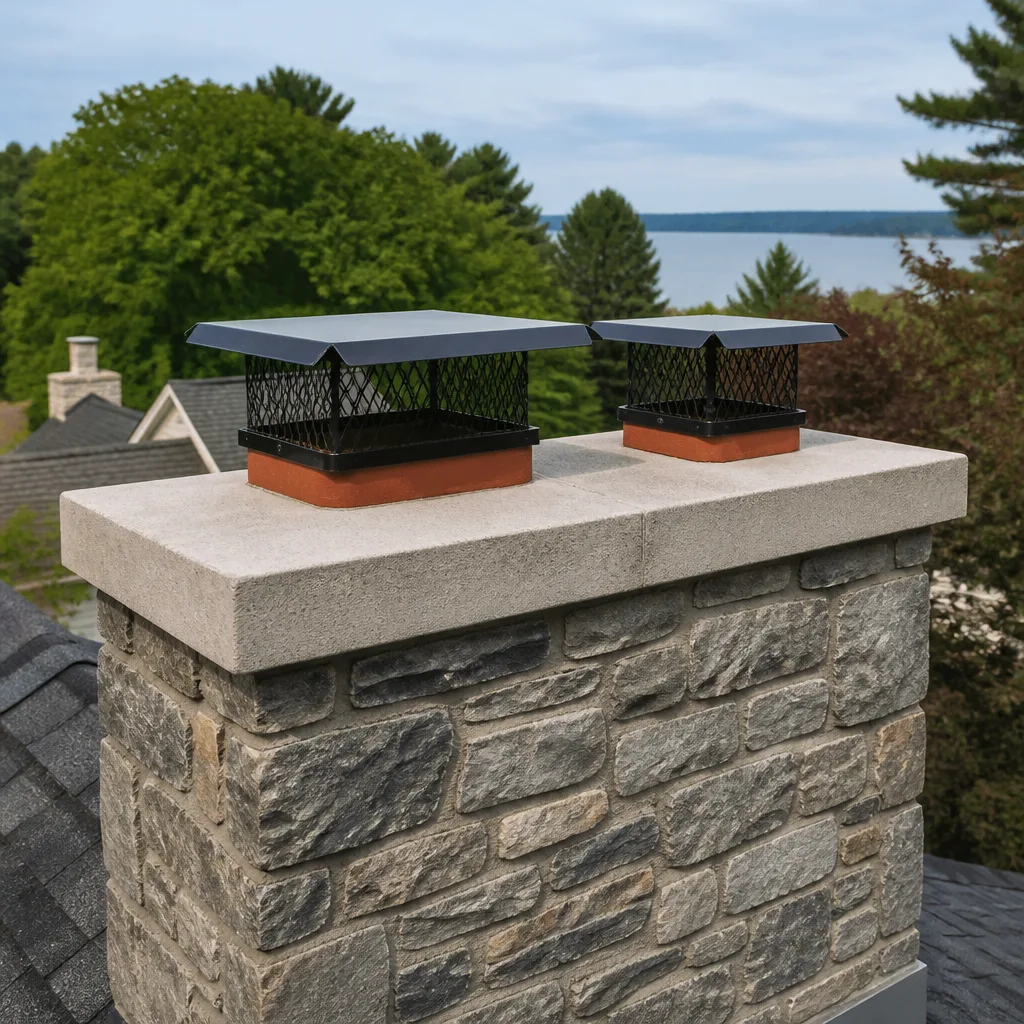 Caps & crowns
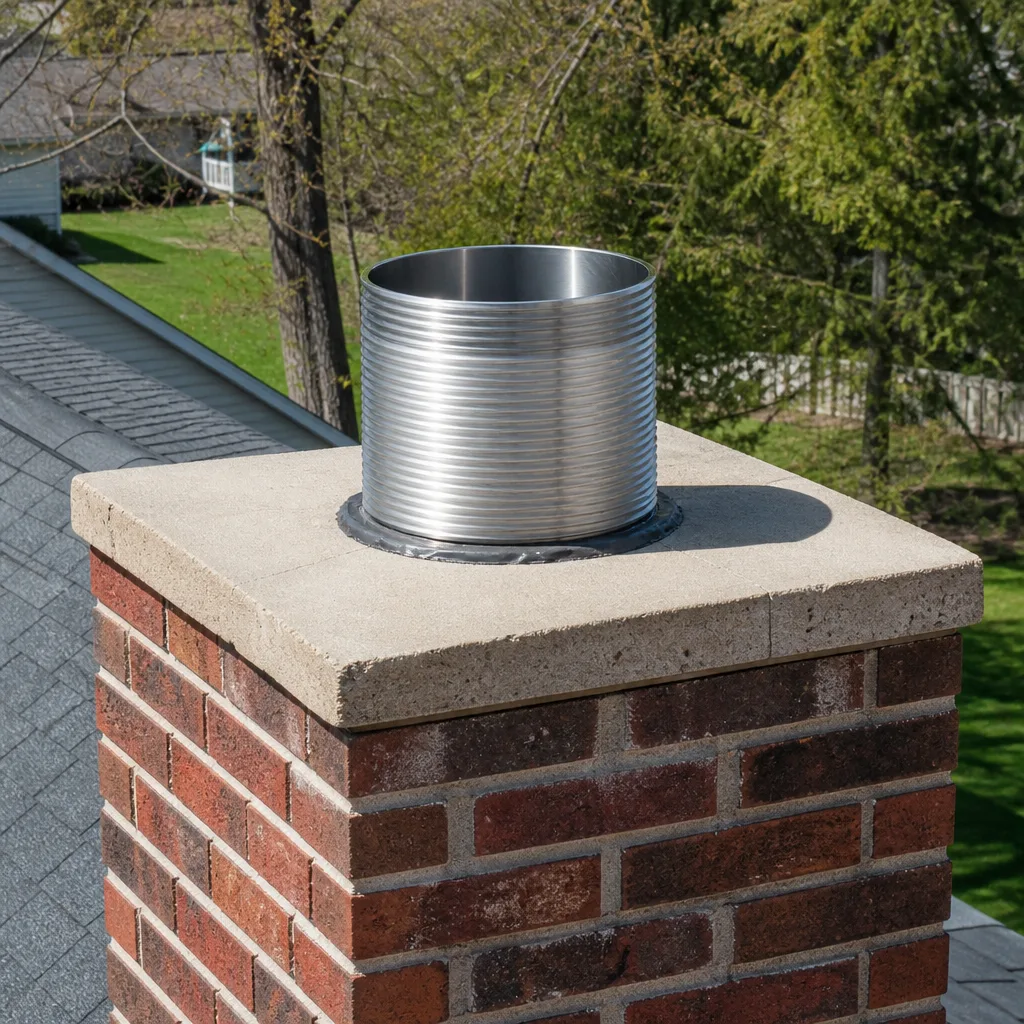 Flue relining
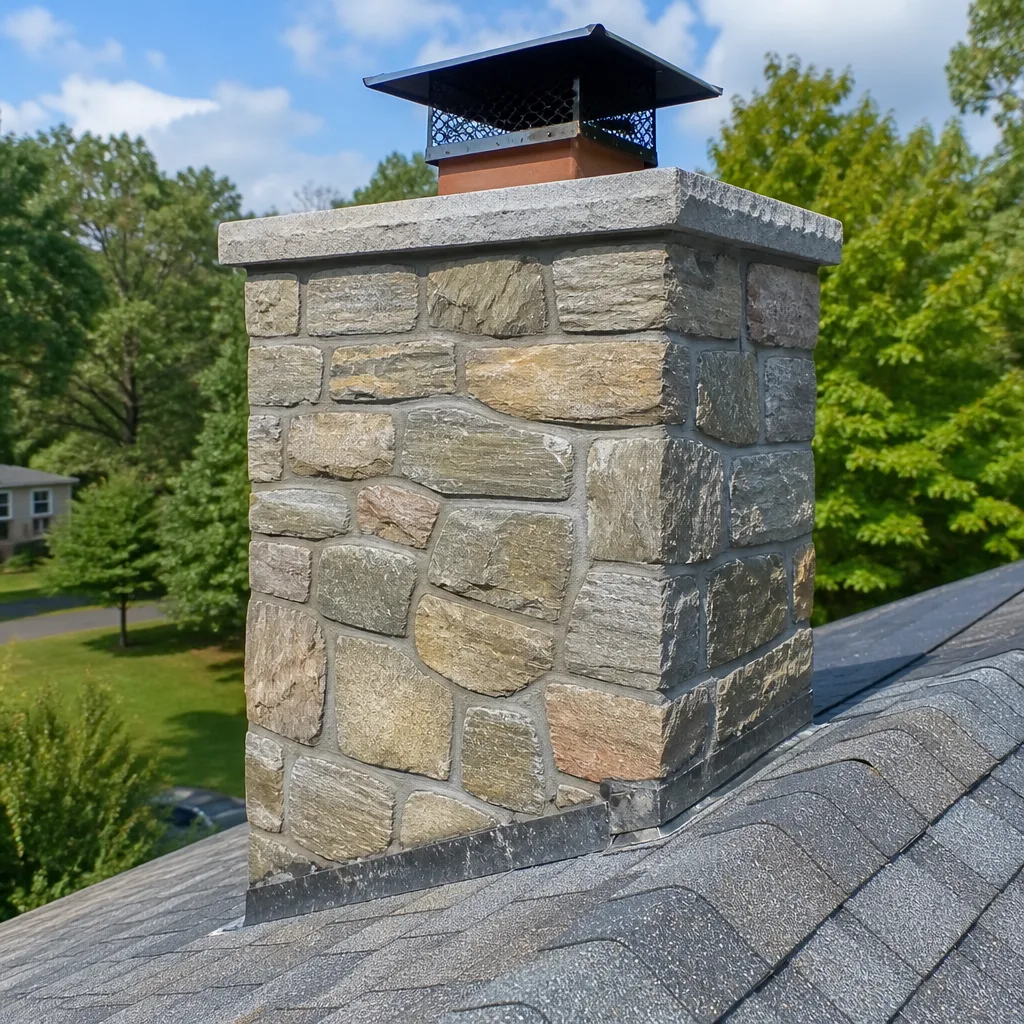 Masonry repair
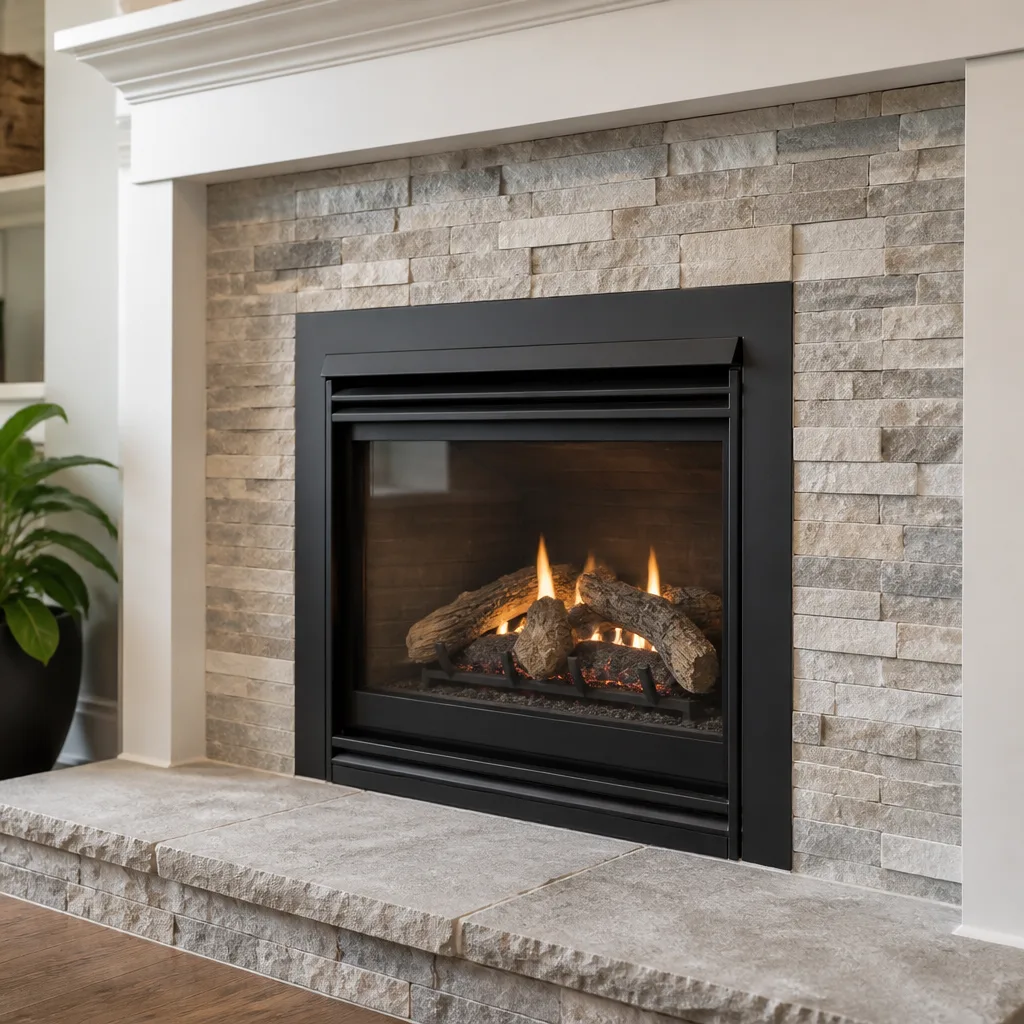 Gas fireplace service
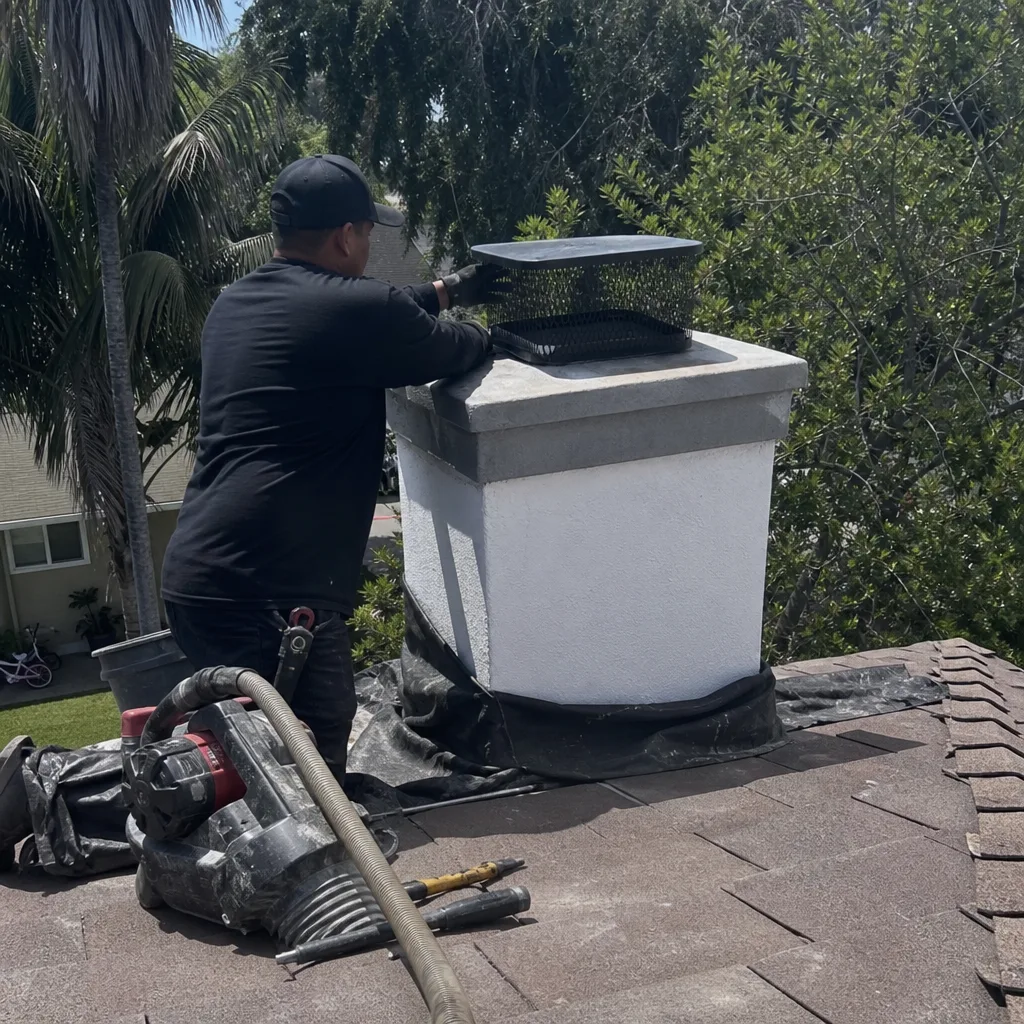
Level 1 sweep and inspection to the NFPA 211 annual standard - flue, crown, cap, and flashing checked and photographed
Chimney sweep logs do not sweep chimneys. They loosen some creosote - which then falls where a brush and vacuum still have to collect it.
Chimney Cleaning Warning Signs: A Downtown San Diego Homeowner’s Reference Guide
A white stain on your chimney’s exterior brick isn’t cosmetic. It’s efflorescence, and it’s telling you water is moving through your masonry right now. By the time you see a crack, that water has been at work for at least one full rainy season. Most Downtown San Diego homeowners wait for smoke in the living room or a chimney fire before they act. This guide covers the subtler signals: the ones that appear months before a dangerous failure, the ones that cost a few hundred dollars to fix instead of a few thousand. You’ll learn how to read staining patterns, interpret damper resistance, test odors, and distinguish real structural damage from the cosmetic surface wear that coastal air accelerates on every masonry surface in the 92101 area.
Styles & brands we work with
- Sweep & inspection
- Caps & crowns
- Flue relining
- Masonry repair
- Gas fireplace service
Quick Answer
The most common chimney warning signs in Downtown San Diego are efflorescence (white mineral staining), a damper that’s become sticky or hard to operate, a persistent musty or sulfur odor from an unlit fireplace, and spalling brick faces that flake or pop away. Any of these signals means moisture, creosote, or structural movement is already active inside your chimney system. The earlier you catch them, the cheaper the repair: a sweep and a minor crown seal runs a fraction of what a full liner replacement costs after a season of neglect.
Table of Contents
- Efflorescence Decoded: What White, Brown, and Green Staining Actually Mean
- Damper Resistance: The Early Warning Hiding in Plain Sight
- The Smell Test: What Your Unlit Fireplace Is Telling You
- Spalling and Pop-Outs: Cosmetic or Structural?
- Downdraft in Downtown: Pressure Differentials vs. Chimney Defects
- Creosote Stages: What’s Actually Building Up in Your Flue
- Common Mistakes to Avoid
- When to Call a Professional
- Frequently Asked Questions
- The Bottom Line
Efflorescence Decoded: What White, Brown, and Green Staining Actually Mean
Efflorescence is the most misunderstood warning sign in chimney sweeping. Homeowners see a white, chalky deposit on brick and assume it’s just what old chimneys do. That assumption is expensive.
Efflorescence forms when water moves through masonry, dissolving soluble salts from the mortar, brick, and the surrounding soil. When that water reaches the surface and evaporates, it leaves the salts behind as a crystalline deposit. In Downtown San Diego, the chemistry is compounded by two local factors: our water supply is naturally hard, carrying elevated calcium and magnesium carbonates, and marine air deposits a fine layer of sodium chloride on exterior surfaces continuously. When fog or rain wets a chimney face, that marine salt goes into solution and migrates into the brick. When it dries, it crystallizes inside the pore structure, not just on the surface.
What Each Color Tells You
White staining is calcium carbonate and sodium chloride. It means water is moving through the masonry, but the source is usually surface-level: rain penetration at the crown, a missing rain cap, or a deteriorated mortar joint. If caught early, the fix is usually straightforward: repair the crown, patch the joints, maybe apply a breathable water repellent. A chimney repair contractor in Downtown San Diego can typically resolve this without touching the flue interior.
Brown or rust-colored staining is a different signal entirely. That’s iron oxide. It means water is contacting the steel components inside your chimney: the damper assembly, the liner, or metal strapping. When brown staining appears on the exterior brick face, the water pathway is traveling from inside the chimney outward. That’s a liner or flashing problem, not a surface problem. In our experience, brown staining below the roofline in Downtown San Diego homes is most often a failed flashing detail where the chimney meets a flat or low-slope roof, a common configuration in the older East Village and Cortez Hill housing stock.
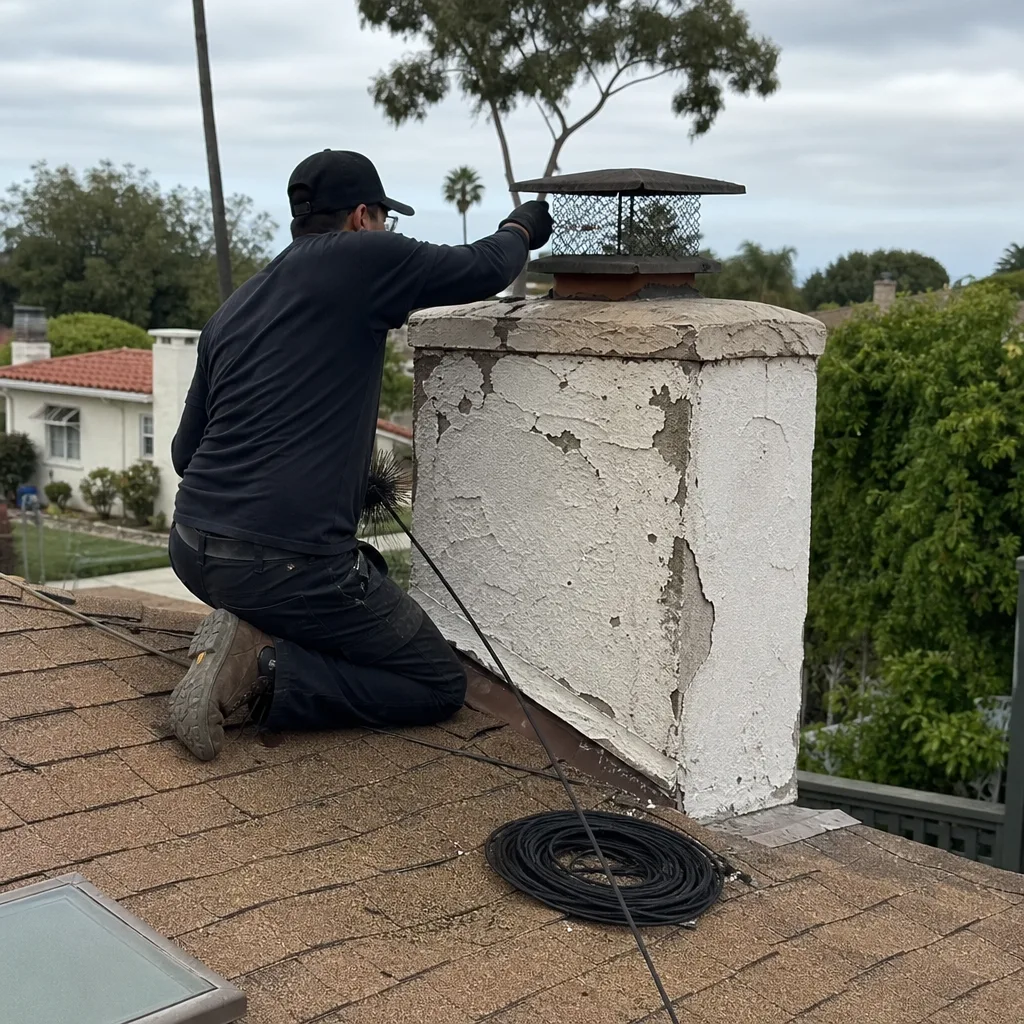
Green staining is biological. Algae, moss, or lichen colonies are establishing on the masonry surface. Green staining tells you something important: that part of the chimney stays wet for extended periods. Unlike efflorescence, which appears wherever evaporation occurs, green growth appears where water accumulates and lingers. On north-facing chimneys in Downtown San Diego, where fog condensation is a daily event from May through August, green staining is extremely common even on structurally sound chimneys. The problem is that continuous biological growth accelerates mortar degradation, because algae and lichen roots penetrate the pore structure and hold moisture against the surface through every wet-dry cycle.
What to Do About Staining
- Photograph the staining from multiple angles. Track whether it changes after rain, after fog, or stays constant.
- Note the location. Staining below the crown points to crown failure. Staining at discrete horizontal bands points to failed flashing. Staining at the roofline on a flat-roof house points to ponding water.
- Have the flue inspected with a camera before anyone applies a sealant. Sealing over active efflorescence traps the water inside the masonry and accelerates spalling.
Damper Resistance: The Early Warning Hiding in Plain Sight
A throat damper that used to swing open with a finger and now requires two hands and a firm shove is not a lubrication problem. It’s a geometry problem.
The throat damper sits directly above the firebox, where it’s exposed to the hottest combustion gases and the most aggressive creosote condensation. Over time, three things happen to a damper that indicate trouble deeper in the system:
- Rust and corrosion: When a damper rusts, it means water is entering the flue from above. A rusted damper is the first visible sign of a failed chimney cap, a cracked crown, or a liner that’s no longer containing condensation.
- Warping: Thin steel damper plates warp when they’re exposed to repeated chimney fires or near-fire conditions. A warped damper no longer seals, which means your conditioned air escapes up the chimney year-round, and your fireplace performance degrades.
- Frame distortion: If the damper frame itself has shifted, the smoke chamber masonry behind it has likely shifted too. That’s a structural movement problem, not a hardware problem.
What we see in Downtown San Diego, particularly in the pre-war buildings of Gaslamp and the Marina District, is dampers that have been in place for fifty or sixty years and have never been adjusted. The resistance residents feel is often a combination of surface rust on the hinge pin and a warp in the damper plate that’s gradually worsened over hundreds of heating cycles. The damper is telling you it’s time for an inspection before it’s time for a replacement.
The takeaway: if your damper doesn’t move smoothly, don’t force it. Forcing a warped or rusted damper is how homeowners break cast-iron damper frames, and that repair is significantly more involved than the inspection that would have caught it early.
The Smell Test: What Your Unlit Fireplace Is Telling You
When a Downtown San Diego fireplace sits unlit, it should smell like nothing, or at most like the faint ash of a long-cold fire. Anything stronger is diagnostic.
A musty or damp-basement odor is almost always water intrusion. Moisture has entered the flue and is sitting somewhere it shouldn’t: in the smoke chamber, behind a damper that’s partially closed, in a puddled section of masonry that slopes the wrong way. In Downtown San Diego’s marine layer climate, where relative humidity regularly sits above 70% for weeks at a time between May and August, a damp chimney doesn’t dry out on its own. The musty smell is the first perceptible sign of ongoing water damage, and it usually appears months before any visible staining does.
A sulfur or rotten-egg smell is a different problem entirely. Sulfur odors from an unlit fireplace are usually caused by creosote off-gassing. As creosote oxidizes, it releases volatile sulfur compounds. A strong sulfur smell means your flue has accumulated enough creosote that it’s actively decomposing, not just sitting there. In gas fireplaces, a sulfur smell can also indicate combustion byproducts backing up into the home instead of drafting up the flue, which is a carbon monoxide concern that demands immediate attention.
An asphalt or tar odor is the one homeowners are least familiar with and most likely to dismiss. It’s the smell of creosote in its most concentrated form, the stage-three glaze that forms when a chimney has been burned hot and fast with unseasoned wood or improper airflow. Stage-three creosote looks like black glass, sticks to the flue wall like enamel, and will not come off with a brush. It requires chemical treatment or mechanical removal. If you smell asphalt when you walk past your fireplace, you’re not smelling the firebox: you’re smelling a flue that is carrying a significant fuel load.
If any of these odors are present, the smart move is a professional chimney sweep in Downtown San Diego with a camera inspection, not an air freshener. Odors from a fireplace are never a housekeeping problem. They’re always a flue condition report.
Spalling and Pop-Outs: Cosmetic or Structural?
Spalling is what happens when the surface of a brick or stone detaches and falls away. It looks like a rough divot in the face of the brick, or a patch of brick face on the ground below the chimney. In conventional masonry practice, spalling is caused by freeze-thaw cycling: water soaks into the brick pore structure, freezes, expands, and pops the surface off.
Downtown San Diego barely freezes. The last meaningful freeze event in the 92101 ZIP code was decades ago. So why do so many chimneys in this part of town show classic spalling patterns?
The answer is salt-driven delamination. Marine salt from the ocean air, combined with the calcium-rich hard water that soaks into masonry from rainfall and fog, forms crystals inside the brick pores. Those crystals grow and shrink with every humidity cycle. Over years, the repeated expansion and contraction literally pries the brick face apart from the inside. It’s freeze-thaw damage, just with salt as the expanding agent instead of ice.
Here’s how to tell the difference between cosmetic scaling and structural spalling:
- Depth: Cosmetic scaling is shallow, a millimeter or less. Structural spalling removes significant material, often leaving a divot you can fit a fingertip into.
- Pattern: Cosmetic scaling spreads evenly across a surface. Structural spalling concentrates at specific locations: mortar joints, chimney corners, the area just below the crown, or anywhere water is concentrated.
- Location: Spalling at the top third of the chimney points to crown failure. Spalling at the roofline points to flashing failure. Spalling in patches across the entire face points to widespread water absorption from Marine layer condensation.
- Fresh residue: If you find brick fragments or sand at the base of your chimney, that’s active, ongoing spalling, not historical damage.
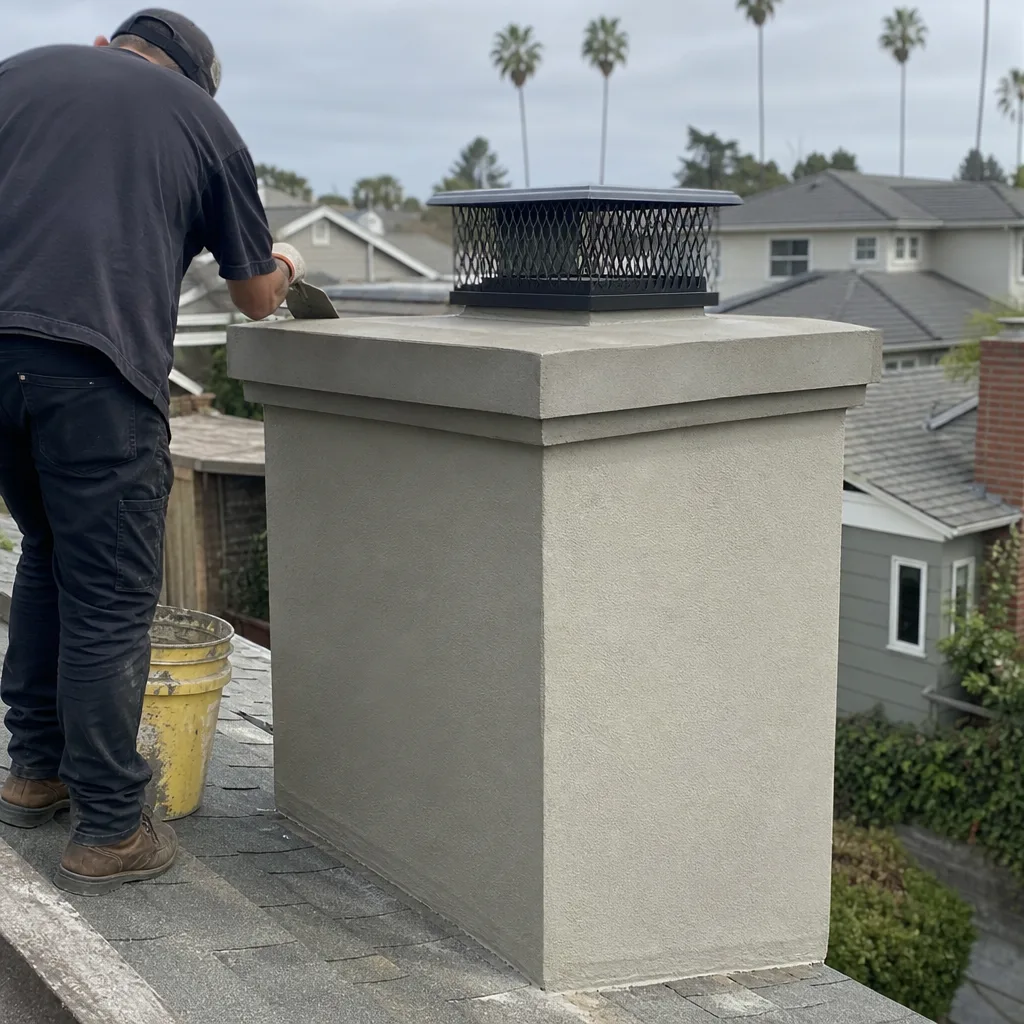
If the spalling has exposed the flue liner or the internal masonry core, the chimney is no longer structurally sound enough to contain a chimney fire, and it needs professional assessment. If the spalling is shallow and limited to a few bricks, a tuckpointing repair may be sufficient to restore surface integrity before the problem worsens.
Downdraft in Downtown: Pressure Differentials vs. Chimney Defects
Downdraft is the most expensive misdiagnosis in the chimney industry. A homeowner lights a fire, smoke rolls into the room, and they call a contractor who tells them the chimney needs a liner, a new crown, a taller flue, or all three. Half the time, the chimney was never the problem.
Downdraft happens when air moves down the chimney instead of up. In Downtown San Diego, where high-rise buildings and tightly constructed condominium units are the norm, the most common cause of downdraft is not a defective chimney. It’s a pressure differential. Modern buildings, especially those built to California’s Title 24 energy standards, are sealed tight. Range hoods, bathroom exhaust fans, and variable-speed HVAC systems all pull air out of the living space. When the house or unit is under negative pressure, the chimney becomes the only available air intake, and air flows down the flue instead of up.
Before you pay for chimney work, perform this simple test:
- Open a window near the fireplace about two inches.
- Wait two minutes for the pressure to equalize.
- Light a rolled sheet of newspaper and hold it in the fireplace opening.
- If the smoke drafts up cleanly with the window open, your chimney is fine. The problem is negative pressure in the home.
- If the smoke still rolls into the room with the window open, you’re looking at a chimney defect: a blocked flue, a failing liner, a chimney that’s too short for the surrounding roofline, or a smoke chamber problem.
Downtown San Diego’s high-rises create another pressure dynamic: wind-loading. When a building stands 20 or 30 stories, the chimney at the top of a neighboring low-rise is constantly exposed to turbulent wind currents that shift with the building’s position. A chimney that drafted perfectly for thirty years may suddenly develop downdraft when a new high-rise goes up across the street. That’s not a defect: it’s a changed wind environment. The fix in that scenario is often a specialized cap or a flue extension, not a full rebuild.
The lesson: if you’re experiencing downdraft in a Downtown San Diego property, get a pressure differential assessment before you agree to any structural work. You might save yourself thousands of dollars and a chimney repair you never needed.
Creosote Stages: What’s Actually Building Up in Your Flue
Creosote is the tar-like byproduct of incomplete wood combustion. Every fire you burn produces some creosote, but the amount and the form depend on how you burn, what you burn, and how the flue is performing. Knowing the three stages of creosote helps you understand what a sweep is actually dealing with:
Stage One: Flaky Dust
A thin, flaky, dark coating that looks like soot. This is what forms in a well-drafted chimney burning properly seasoned hardwood. It’s easily removed with a standard chimney brush during a routine sweep. Most Downtown San Diego homes with wood-burning fireplaces will be at this stage if they’ve been swept within the last two or three years.
Stage Two: Glazed Crust
A thicker, crustier layer that has begun to harden. The flakes are larger and harder, like the crust on a loaf of bread. This stage forms when a chimney sees regular use with less-than-perfect wood, or when the flue is slightly oversized for the firebox, cooling the smoke too quickly and causing condensation before the gases can exit. Stage-two creosote requires more than a standard sweep: it often needs rotary cleaning with specialized tools.
Stage Three: Glazed Tar
A glassy, shiny, tar-like coating that fuses to the flue wall. Stage-three creosote is the most dangerous form: it’s the most concentrated fuel, it ignites at the lowest temperature, and it burns the hottest and longest. Once stage-three creosote is present, a chimney fire is not a hypothetical risk: it’s a countdown. Stage-three creosote cannot be removed with standard brushing. It requires chemical treatment, mechanical removal, or in some cases, liner replacement.
The progression from stage one to stage three isn’t linear: it accelerates. A chimney can go from stage one to stage two in a season of heavy use with unseasoned wood, and from stage two to stage three in a single chimney fire. The only way to know which stage you’re dealing with is a camera inspection, and the only way to reverse it is a professional sweep. If you haven’t had your flue inspected in more than two years, Hometown Chimney Sweep recommends starting with a camera inspection before the next burning season in Downtown San Diego.
Common Mistakes to Avoid
- The annual inspection is for houses that get cold: Wrong. Downtown San Diego’s marine layer climate creates moisture problems that cold climates don’t have. An unused chimney still accumulates moisture, salt, and biological growth. The inspection interval is about exposure, not usage.
- Cleaning the firebox is the same as cleaning the chimney: Sweeping ash out of the firebox does nothing for the flue. The dangerous creosote is in the part of the chimney you can’t see from the living room.
- Water repellent will fix an efflorescence problem: Sealing over the staining traps moisture inside the masonry. You fix the water source first, then you address the staining.
- A strong draft means the chimney is clean: Draft and creosote buildup are unrelated. A wide-open flue can have a third-stage creosote glaze and still draft strongly. That’s exactly the scenario where a chimney fire occurs.
- Downdraft means you need a new chimney: As detailed above, pressure differentials in Downtown San Diego’s sealed buildings are often the cause. Get the pressure assessment before the rebuild quote.
- The gas fireplace doesn’t need cleaning: Gas fireplaces produce acidic combustion byproducts that corrode flue components and can damage the interior finish. The cleanness of the burn doesn’t eliminate the need for periodic inspection.
- You can wait until the smell goes away: Odors from a fireplace indicate active moisture or creosote conditions. Neither one resolves without intervention. What goes away is your sense of smell, because your nose adapts to a persistent odor. The problem doesn’t leave: you just stop noticing it.
When to Call a Professional
If you’ve identified any of the warning signs in this guide: efflorescence staining on your chimney exterior, a damper that’s become resistant or won’t seal, a persistent odor from your unlit fireplace, spalling bricks with fresh residue at the base, or downdraft that doesn’t resolve with the window test, call a professional before you light another fire. The company you want is one that handles the full diagnostic arc: camera inspection, cleaning, and structural repair under one roof. Chimney repair in Downtown San Diego should not require two companies: the crew that finds the problem should be the same crew that fixes it. Hometown Chimney Sweep offers free estimates in Downtown San Diego. Call (866) 670-3503 to schedule an inspection.
Frequently Asked Questions
A chimney in Downtown San Diego should be inspected at least once a year, even if it’s never used, because the marine layer creates moisture conditions that accelerate deterioration. A chimney that’s used regularly should be swept whenever creosote accumulation reaches 1/8 inch or more, which for most households means every one to two years.
A standard chimney sweep in Downtown San Diego typically ranges from $180 to $350, depending on the flue size, the creosote stage, the roof access difficulty, and whether a camera inspection is included. Stage-three creosote removal or flue liner restoration costs more because the work is more specialized. For an exact quote, call (866) 670-3503. Estimates are free.
Not necessarily. A camera inspection will show whether the liner has cracks, holes, or significant deterioration. If the liner is intact but has surface creosote buildup, a professional cleaning is sufficient. If the liner has failed, a new liner is not optional: a failed liner allows heat and combustion gases to contact the surrounding structure, which is the setup for a house fire.
The creosote layer thickens and hardens. At a certain point, a single hot fire can ignite it, causing a chimney fire: a sustained, intensely hot burn inside the flue. Chimney fires can crack liners, destroy the chimney structure, and spread to the rest of the home. Even without a fire, a neglected flue accumulates water damage that eventually requires a full rebuild. Skipping cleaning is always cheaper in the short term and more expensive in the long term.
Most homeowners cannot safely clean their own chimney. The work requires roof access, specialized brushes sized to your flue dimensions, and a thorough understanding of how to remove creosote without damaging the liner or flooding the firebox with debris. The real value of a professional sweep is the camera inspection that comes with it. You’re not paying for the brushing: you’re paying to find out whether the flue is safe to use. For homeowners concerned about dryer vent cleaning in Downtown San Diego, the same principle applies: the cleaning matters, but the inspection is what prevents fires.
The musty smell is common in Downtown San Diego because our summer fog creates sustained high humidity that never lets a damp chimney dry out. That doesn’t make it normal or safe. The smell means moisture is present inside the flue, and moisture is the mechanism behind every major structural chimney failure: crack formation, salt-driven spalling, liner corrosion, and mortar degradation. The fix is usually straightforward: identify where the water is entering, repair that entry point, and have the chimney swept to remove the damp, creosote-laden debris that’s holding the odor.
The Bottom Line
Downtown San Diego chimneys fail differently than chimneys in cold climates. The enemy here is not freeze-thaw: it’s moisture from marine air, salt-crystal expansion, and the relentless humidity of the coastal environment. The warning signs are there if you know what to look for: white, brown, and green staining that each tell a different water story; a damper that doesn’t move like it used to; odors that shouldn’t be there; bricks that are quietly losing their faces; and draft problems that may be a building pressure issue rather than a chimney defect. The earlier you read these signals, the cheaper the fix. And when you’re ready for a professional assessment, Hometown Chimney Sweep covers the full arc: the sweep, the camera inspection, and the repair, with professional-grade materials from the industry brands that matter. One call: (866) 670-3503.
Written by the team at Hometown Chimney Sweep, serving Downtown San Diego since 2015.
See the difference
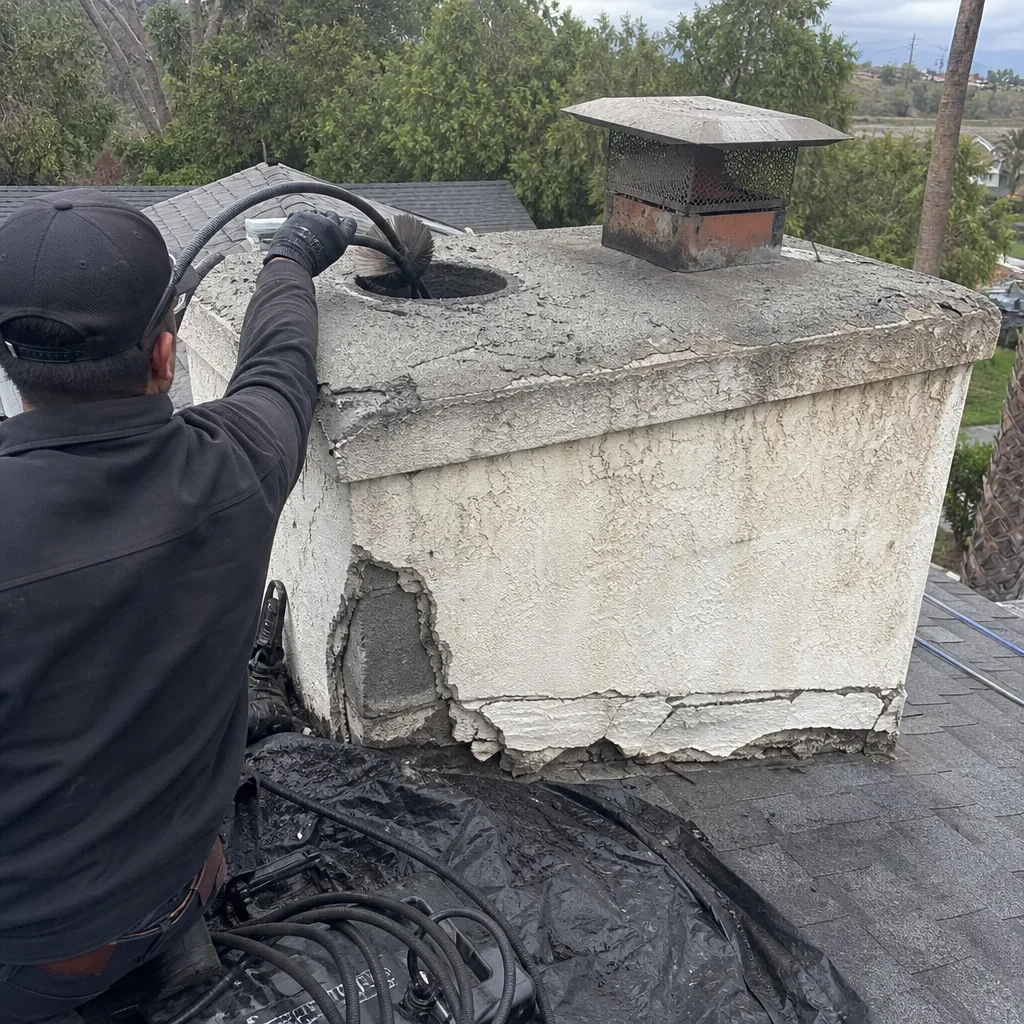 Before
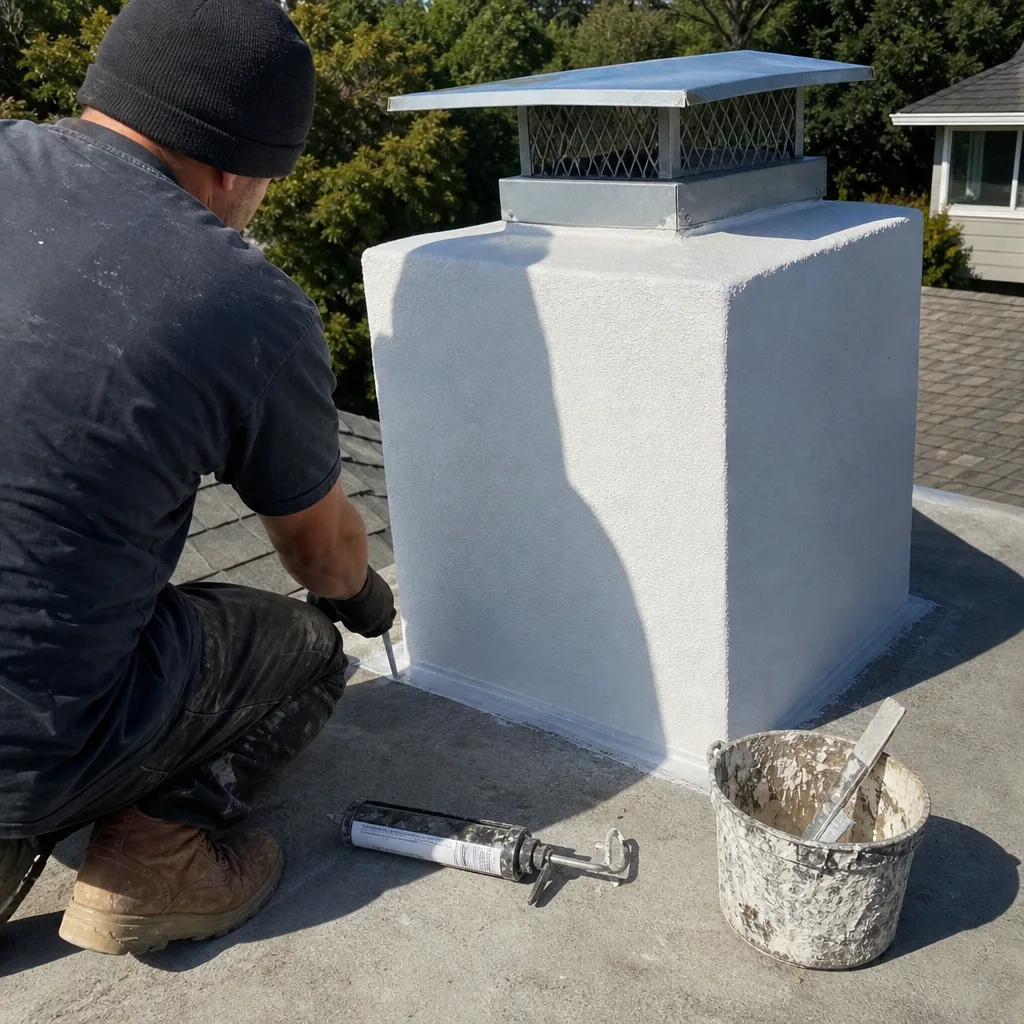 After
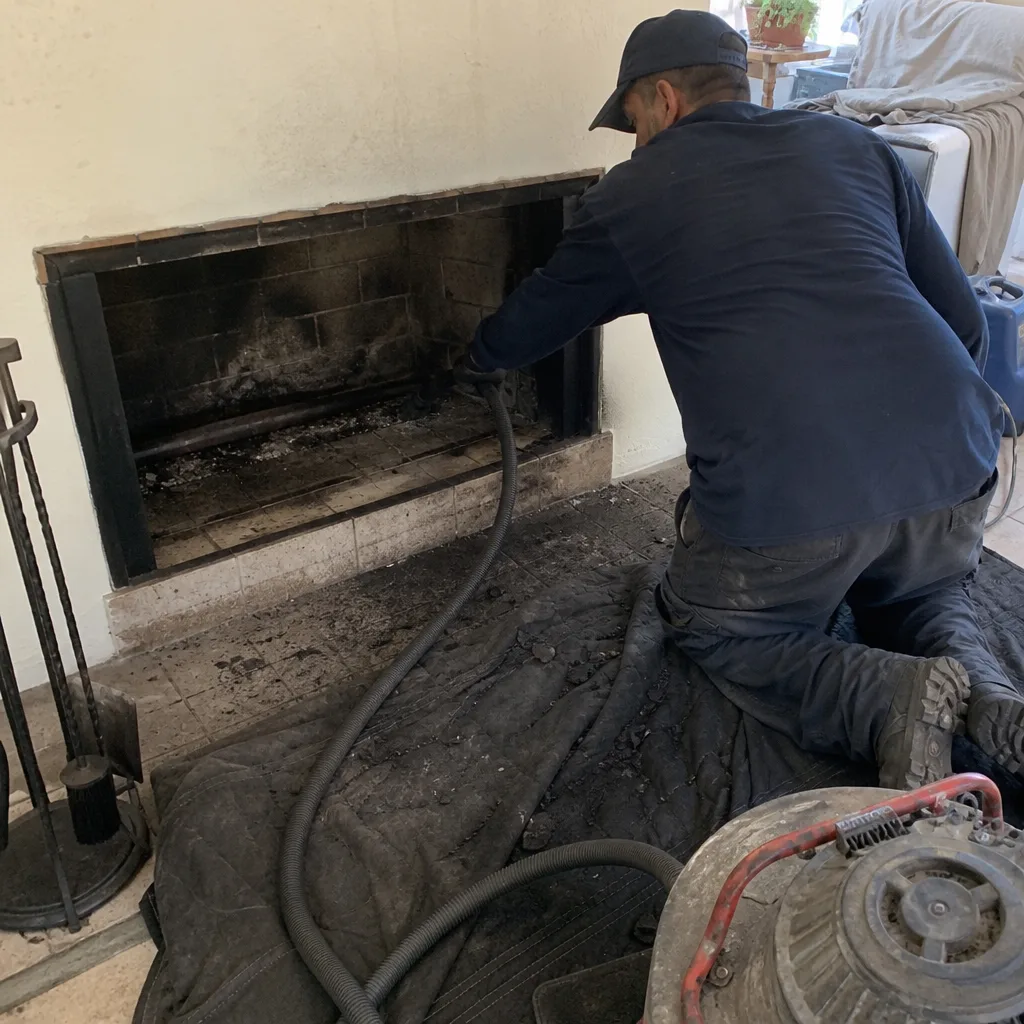 Before
 After
 Before
 After